Get Custom Tablecloths

Category: Buying Guides

  • How to Wash, Store and Care for Custom Tablecloths Between Events

    How to Wash, Store and Care for Custom Tablecloths Between Events

    Published November 17, 2026. Last updated November 17, 2026.

    Custom tablecloths last longest when they are washed cold on a gentle cycle, dried on low or hung, steamed rather than ironed over the print, and stored completely dry. Get Custom Tablecloths prints fitted throws, stretch covers, draped banquet cloths and runners that can be reused across many events, and this guide covers how to care for each style between shows.
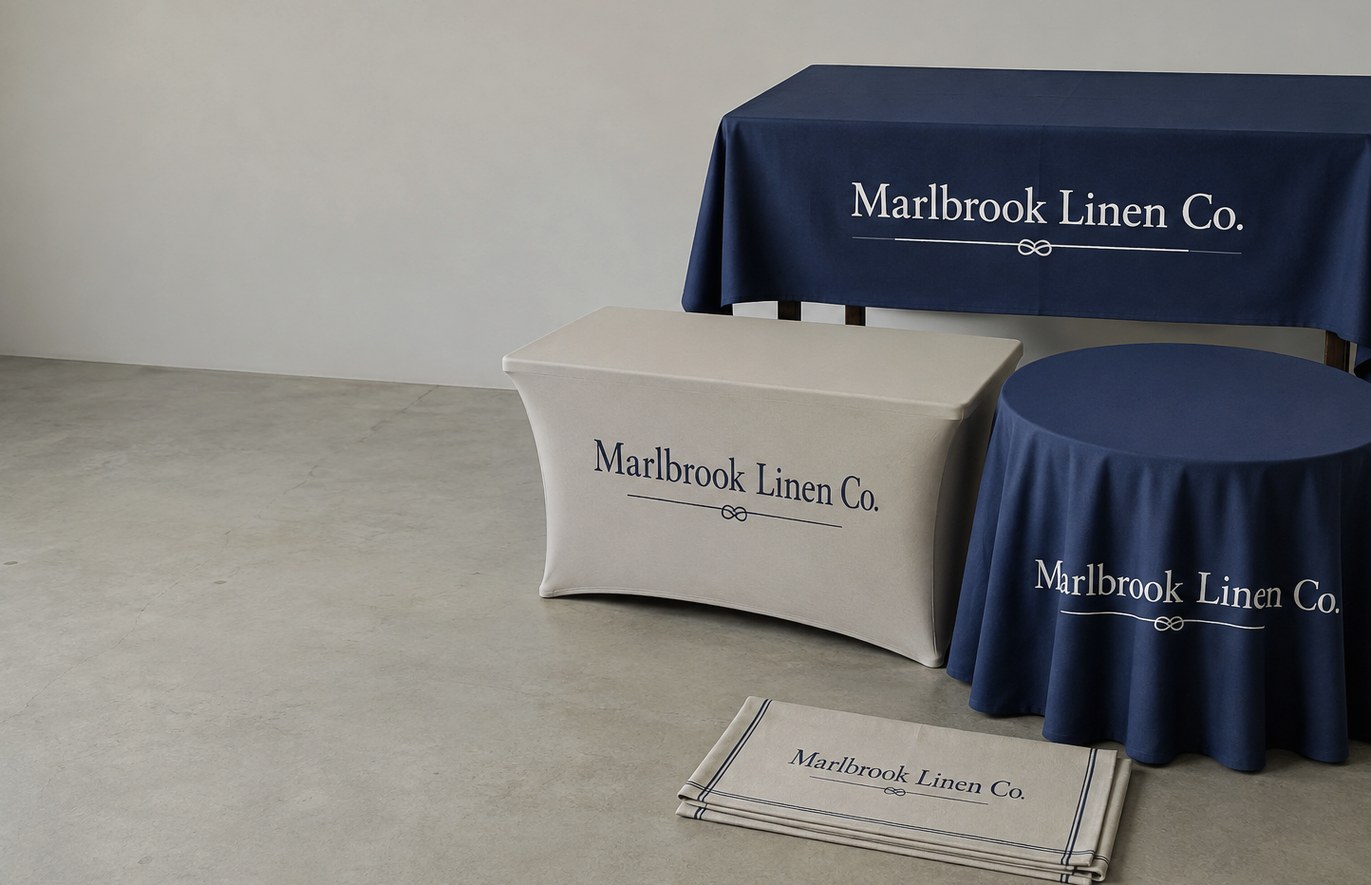
    How to Wash, Store and Care for Custom Tablecloths Between Events - custom printed tablecloths from Get Custom Tablecloths
    Custom tablecloths with a logo, produced by Get Custom Tablecloths.
    Key facts
    • Wash printed tablecloths cold, gentle and inside out; skip chlorine bleach.
    • Steam wrinkles out, or iron woven styles on low from the reverse side; never iron spandex.
    • Store tablecloths completely dry in breathable bags to prevent mildew.
    • Flame-retardant linen should be cleaned exactly as its supplied care guidance directs.
    • Reorders start with a free mockup within 24 hours and about 2 weeks standard turnaround.

    What are custom tablecloths made of, and why does that change how you care for them?

    Most custom tablecloths from Get Custom Tablecloths are printed polyester or polyester-spandex blends, and the fabric decides almost every care choice you make afterward. Polyester holds dye-sublimated color inside the fiber, resists shrinking and dries quickly, so a printed fitted throw or draped banquet cloth can be washed and reused for many events when it is handled gently.

    Stretch spandex table covers behave differently. The elastic content is what gives a spandex cover its tight, wrinkle-free shape, and high heat is the fastest way to wear that elasticity out. Flame-retardant linen is a third category: the fabric is chosen to meet venue fire rules, and how it is washed can matter for keeping that rating.

    Before the first wash, find out which of these you own. The style name on your order usually tells you:

    • Printed fitted table throws and draped banquet cloths: woven polyester, the most forgiving to wash, steam and fold.
    • Stretch spandex table covers and stretch cocktail covers: a knit blend that needs low heat and no ironing.
    • Flame-retardant and venue-spec linen: follow the care guidance supplied for that fabric, because treated and inherently flame-retardant fabrics are not cared for the same way.
    • Printed table runners and toppers: smaller pieces in the same fabrics, often the first to pick up food and drink stains.

    How should you wash a printed tablecloth after an event?

    Wash a printed tablecloth in cold water on a gentle cycle with a mild detergent, inside out, then hang it or tumble dry on low. That routine protects the printed logo, keeps polyester from picking up heat creases and stops spandex from losing its stretch. Wash custom tablecloths soon after the event so spills do not set into the fibers.

    Most damage to event linen does not come from washing at all. It comes from a cloth that sat balled up in a bin for a week with a coffee spill on the front panel. A short routine after every show keeps your custom tablecloths looking like new:

    1. Shake it out on site. Crumbs, glitter and confetti come off far more easily before the cloth is folded.
    2. Spot-treat stains the same day. Blot spills with cold water; avoid rubbing, which spreads them.
    3. Turn it inside out. The printed side is protected from friction against other items in the drum.
    4. Wash cold and gentle, on its own or with similar colors. Skip heavy loads with towels or jeans that rub the surface.
    5. Skip chlorine bleach and fabric softener. Bleach can fade printed color; softener can leave a film that attracts lint.
    6. Dry low or hang dry. Pull the cloth out while it is still slightly damp to limit creases.

    If your order came with specific care guidance, that guidance wins over any general routine, especially for flame-retardant fabric.
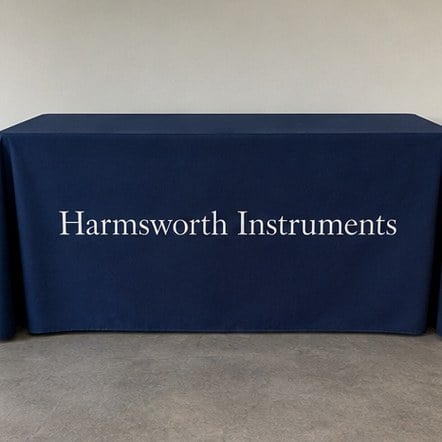
    Printed Fitted Table Throws | Custom Printed in Bulk — Get Custom Tablecloths - one of the custom tablecloths styles from Get Custom Tablecloths
    Printed Fitted Table Throws | Custom Printed in Bulk — Get Custom Tablecloths.

    How do you get wrinkles out of custom tablecloths before a show?

    A handheld garment steamer is the safest way to take wrinkles out of custom tablecloths, because it relaxes polyester without pressing heat directly into the print. Steam the cloth while it hangs or after it is on the table, working from the top surface down the front panel, and fold lines usually drop out in a few minutes.

    For woven fitted throws and draped banquet cloths, a clothes iron on a low synthetic setting also works. Iron on the reverse side of the printed area, or place a pressing cloth between the iron and the logo, and keep the iron moving. A hot iron left in one spot can leave a shine mark on polyester that will not wash out.

    Stretch spandex table covers rarely need either. Once a spandex cover is pulled tight over the table frame, most creases disappear on their own. If a stubborn line remains, a light pass of steam from a distance is enough. Never iron spandex: the heat damages the elastic fibers and the cover will sag on the next table.

    At trade shows, build a few minutes into setup for a quick steam. A table at the front of the booth is the first thing visitors see, and a crisp front panel makes the printed logo read cleanly in photos.

    What is the best way to store custom tablecloths between events?

    Store custom tablecloths clean, completely dry and loosely rolled or folded in a breathable bag or bin, somewhere cool and out of direct sunlight. Moisture is the main enemy of stored linen: a cloth packed away damp can develop mildew spots and a musty smell, and those marks are much harder to remove than any event spill.

    Rolling works well for printed fitted table throws and draped banquet cloths, because there are no sharp folds across the logo. Roll with the printed side facing out around a cardboard tube if you have one. If space is tight, fold along the same lines each time so creases stay off the front panel.

    A few storage habits save time on the next setup:

    • Label each bag by style and table size, so nobody pulls a cocktail cover when they need a banquet cloth.
    • Keep stretch covers separate from rough items like table legs, zip ties and display hardware that can snag knit fabric.
    • Avoid sealed plastic for long storage. A cotton bag or vented bin lets trapped moisture escape.
    • Keep evergreen and event-specific cloths apart, so dated designs are easy to find or retire.

    A travel case that holds the tablecloth, a small steamer and a lint roller keeps everything the booth team needs in one place.

    Which tablecloth styles need the most care?

    Stretch spandex table covers and flame-retardant linen need the most attention, while printed fitted table throws and draped banquet cloths are the easiest to keep in good shape. The table below compares how each style from Get Custom Tablecloths is usually washed, de-wrinkled and stored, so you can plan the right routine for a mixed order.

    StyleWashingWrinklesStorage
    Printed fitted table throwCold, gentle, inside outSteam or low iron on reverseRoll or fold along the same lines
    Draped banquet clothCold, gentle, low drySteam on the tableRoll on a tube to protect the print
    Stretch spandex table coverCold, gentle, hang dry preferredUsually none once fitted; never ironFold loosely, away from hardware
    Round and cocktail coversCold, gentle, wash promptly after drinksSteam; stretch styles relax when fittedSeparate bag per table size
    Table runners and toppersCold, gentle, spot-treat oftenSteam or low iron on reverseRoll flat with the print outward
    Flame-retardant venue linenFollow the supplied care guidanceSteam or low iron as directedDry, labeled, ready for venue checks

    If you are still choosing a style, care is a fair tiebreaker. A team that travels constantly and has no time to steam often prefers stretch covers, while a venue with a laundry service may lean toward draped banquet cloths.

    How do you deal with spills and stains on custom tablecloths during an event?

    Blot a spill on custom tablecloths immediately with a clean cloth and cold water, then let the stain wait for a proper wash after the event rather than scrubbing it at the table. Quick blotting lifts most coffee, soda and wine before it reaches deep into the fibers, and the printed logo survives far better than it would under hard rubbing.

    A small kit under the table makes this easy: paper towels, a bottle of water, a stain-remover pen made for synthetic fabrics and a lint roller. Test any stain remover on a hidden corner first, such as the inside of the back panel, because some products can lighten printed color.

    Greasy food is the stain most likely to linger on polyester. Treat it with a little dish soap worked in gently before washing, and check the spot before drying, since heat from the dryer can lock in what is left. Candle wax is better left to harden, then lifted off rather than wiped.

    For food-heavy events like banquets and receptions, printed table runners and toppers on top of a base cloth take the spills and are quicker to wash than a full tablecloth.

    When should you replace or reorder custom tablecloths?

    Replace custom tablecloths when the front panel no longer looks sharp from a few steps away: visible fading, stains that survive washing, snags in stretch fabric, or a cover that sags instead of fitting tight. With careful washing and dry storage, printed polyester linen usually stays presentable across many events.

    Wear is not the only reason to reorder. A rebrand, a new tagline, a new sponsor or a booth redesign can make perfectly good tablecloths outdated. Teams that keep one evergreen design and a separate set of event-specific cloths find it easier to retire only what has changed.

    Reordering is simple when the original artwork is on file. Send the same logo and style details through the quote form, and Get Custom Tablecloths returns a free mockup within 24 hours. You pay nothing until you approve the design, and standard turnaround is about 2 weeks, with faster options available through express shipping. Ordering replacements before the old set is completely worn out means the booth never has to go back to a plain cloth.

    Frequently asked questions

    Can I put a custom printed tablecloth in the dryer?

    A custom printed tablecloth made of woven polyester can usually go in the dryer on a low heat setting, and pulling it out while slightly damp helps prevent set-in creases. High heat is the risk, especially for stretch spandex covers, where it weakens the elastic fibers. Hang drying is the gentlest option for any style, and Get Custom Tablecloths recommends it for stretch covers.

    Is it safe to iron directly over the printed logo on a tablecloth?

    Ironing directly over the printed logo on a tablecloth is best avoided. Turn the cloth over and iron the reverse side on a low synthetic setting, or put a pressing cloth between the iron and the print. Keep the iron moving, because a hot iron left in place can leave a permanent shine mark on polyester. Never iron stretch spandex covers.

    Does washing affect a flame-retardant tablecloth?

    A flame-retardant tablecloth may need different care depending on how the fabric gets its rating. Inherently flame-retardant fabrics keep the property in the fiber itself, while treated fabrics can be affected by repeated or harsh laundering. Get Custom Tablecloths supplies care guidance with venue-spec linen, so follow it closely and keep any paperwork handy for venue fire inspections.

    Should custom tablecloths be dry cleaned instead of washed at home?

    Custom tablecloths in printed polyester rarely need dry cleaning, since a cold, gentle home or commercial wash handles normal event soiling well. Dry cleaning solvents are unnecessary for most styles and are not always kind to printed color. The exception is flame-retardant linen with specific care instructions, which should be cleaned exactly as directed by the guidance supplied with the order.

    Can bleach or stain remover be used on a printed tablecloth?

    Chlorine bleach should never touch a printed tablecloth, because it can strip or lighten the printed colors and weaken synthetic fibers. Oxygen-based or synthetic-safe stain removers are usually fine, but test them first on a hidden area such as the inside of the back panel. Apply, wait briefly, and rinse in cold water before running a normal gentle wash.

    What is the best way to remove candle wax from a tablecloth?

    Candle wax on a tablecloth comes off most cleanly once it has fully hardened. Let it cool, or hold an ice pack against it, then gently lift the wax away with a dull edge such as a plastic card. Any thin residue can usually be treated with a synthetic-safe stain remover before a cold wash. Avoid scraping hard across the printed area.

    Can a commercial laundry or venue linen service clean my custom tablecloths?

    A commercial laundry can clean custom tablecloths, but tell them the linen is printed and ask for cold water, no chlorine bleach and low heat drying. Venue linen services often process white banquet linen at high temperatures, which is too harsh for printed polyester and stretch fabric. Get Custom Tablecloths suggests labeling branded cloths clearly so they never get mixed into a venue's general linen.

    Is a handheld steamer worth bringing to a trade show for tablecloths?

    A handheld steamer is one of the most useful tools to pack with tablecloths for a trade show. Linen often travels folded in a case for days, and a few minutes of steam removes fold lines across the front panel before the doors open. Choose a compact travel model, check the venue's electrical rules, and keep the steamer moving to avoid dripping water on the print.

    Will a printed tablecloth get mildew if packed away damp?

    A printed tablecloth packed away even slightly damp can develop mildew spots and a musty smell, particularly in a closed plastic bin or a warm storage room. Mildew marks are often harder to remove than the original spill. Always let tablecloths dry completely after washing or an outdoor event, and store them in a breathable bag or a vented container in a cool, dry place.

    Should custom tablecloths be folded or rolled for long-term storage?

    Rolling is usually the better choice for storing custom tablecloths for months at a time, because it avoids sharp creases across the printed logo. Roll printed fitted throws and draped banquet cloths with the print facing outward, ideally around a cardboard tube. Get Custom Tablecloths customers short on space can fold instead, keeping fold lines away from the front panel.

    How can I tell when a custom tablecloth needs replacing?

    A custom tablecloth needs replacing when it no longer looks professional from a few steps away. Watch for faded color on the front panel, stains that remain after washing, snags or runs in stretch fabric, and covers that sag rather than fit tight. A quick check after each event, before the cloth goes back into storage, catches these issues before the next show.

    Do dark or light tablecloths show wear sooner?

    Light tablecloths in white, cream or pale colors show food stains, scuffs and dust sooner, while dark tablecloths hide everyday marks but can show lint, pet hair and pale powders. Neither color wears out faster with proper care. Get Custom Tablecloths can mock up your logo on more than one background, so you can compare how each will look after a long day of setup.

    Get a free mockup for your tablecloths

    Send your logo or idea and the quantity you have in mind. Get Custom Tablecloths returns a free mockup within 24 hours, you approve the design before anything is produced, and standard turnaround is about two weeks with faster options available. Get a custom quote.

  • How to Prepare Logo Artwork for Custom Tablecloths: Files, Placement and Proofs

    How to Prepare Logo Artwork for Custom Tablecloths: Files, Placement and Proofs

    Published November 14, 2026. Last updated November 14, 2026.

    Custom tablecloths print best from a vector logo file, placed in the upper-middle of the front panel, with strong contrast against the cloth color and very little extra text. Get Custom Tablecloths turns that artwork into a free mockup within 24 hours, so the file, placement and color choices you make before ordering decide how the finished linen looks.

    How to Prepare Logo Artwork for Custom Tablecloths: Files, Placement and Proofs - custom printed tablecloths from Get Custom Tablecloths
    Custom tablecloths with a logo, produced by Get Custom Tablecloths.
    Key facts
    • Vector files (AI, EPS, SVG or editable PDF) scale cleanly across a full front panel.
    • The front panel is the main print area; top, sides and back are optional.
    • Dark cloths usually need a reversed white or light logo.
    • Free mockup within 24 hours, unlimited free revisions, pay nothing until you approve.
    • Standard production takes about 2 weeks after approval.

    What artwork file should you send for custom tablecloths?

    Send a vector file of your logo for custom tablecloths whenever you have one: an AI, EPS, SVG or a PDF exported from design software with the artwork still editable. Vector artwork is built from shapes rather than pixels, so Get Custom Tablecloths can scale it across a full front panel of a fitted throw or a draped banquet cloth without blurring or jagged edges.

    A tablecloth is one of the largest surfaces your logo will ever be printed on. A file that looks sharp in an email signature or on a business card can fall apart when it is enlarged to span the front of a table, because a small raster image simply does not hold enough detail. That is the single most common reason a tablecloth mockup comes back with a note asking for a cleaner file.

    • Best: the original vector file from whoever designed your logo, with fonts converted to outlines.
    • Workable: a large, high-resolution PNG or PDF, especially for photographic or full-color artwork.
    • Avoid: screenshots, logos copied from a website header, social media profile images and files that have been compressed and resent many times.

    If you are not sure what you have, attach everything you can find to the quote form. The team will tell you which file works and flag anything that will not print cleanly at tablecloth scale before the mockup is finalized.

    Where does the logo go on a custom tablecloth?

    The front drop is the main print area on almost every custom tablecloth, because it is the panel visitors see as they walk toward the table. The top surface, side panels and back are secondary areas, and which of them make sense depends on the style you order and how the table will actually be used.

    Think about what will be sitting on and around the table. At a trade show booth, brochures, a monitor or product samples often cover most of the tabletop, so a logo printed on the top may never be seen. At a registration desk, staff chairs and legs sit behind the cloth, so the back panel rarely matters. At a cocktail reception, guests circle the table, which is why round and cocktail covers often carry the design all the way around.

    StylePrimary print areaWorth considering
    Fitted table throwFront panelSide panels for booths visible from an aisle corner
    Stretch spandex coverFront panelTop surface when the table stays clear
    Draped banquet clothFront dropA centered top mark for seated dinners
    Round and cocktail coverWraparound or repeated logoTwo placements so every side reads

    Tell the team how the table will be dressed on the day, and the mockup will place the artwork where people will actually see it.

    Printed Fitted Table Throws | Custom Printed in Bulk — Get Custom Tablecloths - one of the custom tablecloths styles from Get Custom Tablecloths
    Printed Fitted Table Throws | Custom Printed in Bulk — Get Custom Tablecloths.

    How do brand colors behave on tablecloth fabric?

    Brand colors on custom tablecloths depend on two things: the base color of the fabric and the print method. Get Custom Tablecloths shows your colors on the mockup against the cloth color you choose, so you can judge contrast before anything is produced rather than after the linen arrives.

    Fabric is not paper. Polyester tablecloth fabric has a woven texture and a slight sheen, so colors can read a touch softer or deeper than they do on a backlit screen. If you have Pantone references for your brand, include them with your artwork; they give the production team a fixed target instead of a guess based on a monitor. If you only have screen colors, say so, and the mockup will be your reference point.

    The cloth color itself is a design decision. A black or navy tablecloth hides scuffs and looks formal, but a dark logo will disappear on it. Most brands handle this with a reversed version of the logo: white or light artwork that keeps the same shape. If your brand guide includes a reversed logo, send it alongside the standard one.

    • Match the cloth to your booth backwall or event palette, not only to the logo.
    • Check that thin light elements stay visible on dark fabric.
    • Ask for a full-color, edge-to-edge design through dye-sublimation when the background itself is part of the brand.

    How big should the logo and text be on a tablecloth?

    The logo on a custom tablecloth should be large enough to read from across a room or down an exhibit aisle, which usually means bigger than first-time buyers expect. A tablecloth works like a sign at waist height: people glance at it while walking, so the brand name has to register in a second or two.

    Keep the message short. One logo, and at most one line of supporting text such as a tagline or website, is easier to read than a paragraph of services. Long lists of products, phone numbers and social handles crowd the front panel and shrink everything to a size nobody can read from a distance.

    Watch the lower edge and the corners. On a floor-length fitted throw or draped cloth, anything printed near the hem may be hidden by chairs, boxes or a carpet edge, and artwork near a fold can bend out of sight. Placing the logo in the upper-middle part of the front panel keeps it above table clutter and at the eye line of people walking past.

    Fine details deserve extra care. Hairline outlines, tiny trademark symbols and thin script fonts can soften on textured fabric. The mockup is the place to check whether those elements still read, and to ask for a bolder version if they do not.

    What should you check on the free tablecloth mockup before approving?

    Check the free tablecloth mockup for spelling, logo version, colors, placement and the exact style and size before you approve it. Get Custom Tablecloths returns the mockup within 24 hours, offers unlimited free revisions and charges nothing until you approve, so it costs you nothing to send it back with corrections.

    1. Text: read every word aloud, including the website address, tagline and any event name.
    2. Logo version: confirm it is the current logo, not an older version still saved on a shared drive.
    3. Contrast: look at the artwork against the cloth color, not against a white page.
    4. Placement: confirm the front panel, top and sides match how the table will be dressed.
    5. Style and size: confirm fitted, stretch, draped, cocktail or runner, and the table size, for every line on the order.
    6. Back panel: confirm open or closed back on throws and draped cloths.
    7. Approvals: share the mockup with whoever owns the brand before you sign off.

    Most problems a buyer discovers at the event could have been caught here. Five minutes spent on this list saves a reprint.

    What are the most common tablecloth artwork mistakes?

    The most common tablecloth artwork mistakes are low-resolution files, logos that vanish against the cloth color and artwork placed where the table setup will hide it. Each is easy to fix before production and expensive to fix after, which is why Get Custom Tablecloths flags them at the mockup stage.

    • A web logo stretched to fit: a small image pulled from a website header looks soft and pixelated across a full front panel.
    • Dark on dark: a navy logo on a black cloth, or a gray tagline on charcoal, reads well on screen and poorly in a dim venue.
    • Too much copy: service lists, addresses and several social handles shrink the logo and slow the reader down.
    • Dates on evergreen linen: printing this year’s event date on a cloth you plan to reuse ends its life after one season. A printed runner or topper can carry dated messages instead.
    • Hem-level artwork: anything near the bottom edge disappears behind chairs and boxes.
    • Unoutlined fonts: a file sent with live fonts can substitute a different typeface if the font is missing.

    How does the artwork step fit into your tablecloth order timeline?

    The artwork step is the only part of a custom tablecloth order you fully control, so it is where most schedules are won or lost. Get Custom Tablecloths returns a free mockup within 24 hours of receiving usable artwork, and standard production takes about 2 weeks after you approve, with faster turnaround available through express shipping.

    The clock that matters starts at approval, not at the first email. If you send a low-resolution file, wait for a better one from a designer, then route the mockup through three people, a week can pass before production begins. Sending a clean vector file, your brand colors and a clear table list on day one removes most of that delay.

    Approved artwork stays on file, which makes the next order simpler. When a new office opens or a second booth team needs its own set, the reorder can go straight to production without repeating design work. Organizations that run many events, such as the congregations described on the church and faith community tablecloths page, benefit from getting the master file right the first time. Learn more on how it works.

    Frequently asked questions

    Can I send a logo copied from my website for a custom tablecloth?

    A logo copied from a website is usually too small for custom tablecloths, because web images are sized for screens rather than a full front panel. Enlarged across a fitted throw or draped cloth, the edges turn soft and pixelated. Get Custom Tablecloths will flag a file like this at the mockup stage, so ask your designer for the original vector version before you order.

    Can a tablecloth logo go on the top surface instead of the front?

    Custom tablecloths can carry a logo on the top surface, though the front panel stays the most visible spot for most events. A top print works on tables that stay clear, such as a seated dinner or a stretch cover at a cocktail reception. At a busy trade show booth, brochures and displays often hide the top, so most buyers keep the main logo on the front.

    Should I use a reversed white logo on a dark tablecloth?

    A reversed logo is usually the right choice for a black, navy or charcoal custom tablecloth. A dark logo printed on dark fabric loses contrast and becomes hard to read in a dim ballroom or exhibit hall. Send both your standard and reversed versions to Get Custom Tablecloths, and the free mockup will show which reads better on the cloth color you chose.

    Can I print on the side panels of a fitted tablecloth too?

    Side panels on a fitted custom tablecloth can carry artwork alongside the front panel. Side prints help when a booth sits on an aisle corner or when visitors approach the table from more than one direction. Mention every panel you want printed in your quote request, and the mockup will show how the front and side designs line up at the corners.

    Do I need to convert fonts to outlines in tablecloth artwork?

    Converting fonts to outlines is the safest way to send text for custom tablecloths. A file with live fonts can display a substitute typeface if the font is missing on another computer, which quietly changes the look of your brand. Outlined text keeps the exact letterforms. If you cannot outline the file yourself, name the fonts used so Get Custom Tablecloths can check them.

    How much text is too much on a custom tablecloth front panel?

    Custom tablecloths read best with one logo and no more than one short line of supporting text, such as a tagline or website. People glance at a table while walking past, so lists of services, addresses and several social handles shrink everything and slow the reader down. Put detailed information on brochures or signage and let the tablecloth carry the brand.

    Can I put a website address or QR code on a tablecloth?

    A website address or QR code can be printed on custom tablecloths, and both work best as a secondary element below the main logo. Keep a QR code large enough to scan from a short distance and test it on the mockup before approval. Get Custom Tablecloths shows the exact placement in the free mockup so you can confirm it stays above table clutter.

    How do I keep a tablecloth logo from being hidden by chairs or displays?

    Keeping the logo in the upper-middle part of the front panel protects custom tablecloths from being blocked by chairs, boxes and display stands. Artwork near the hem of a floor-length throw or draped cloth often disappears once the table is set up. Tell Get Custom Tablecloths what will sit on and around the table, and the mockup will place the design where people can see it.

    What happens to thin lines and small type when printed on tablecloth fabric?

    Thin lines and very small type can soften on custom tablecloths because polyester fabric has a woven texture rather than a smooth paper surface. Hairline outlines, tiny trademark marks and delicate script fonts are the elements most likely to lose definition. Get Custom Tablecloths will point out details at risk on the mockup, and a slightly bolder version usually fixes the problem.

    Can I ask for changes after I see my tablecloth mockup?

    Changes to a custom tablecloth mockup are expected, and Get Custom Tablecloths offers unlimited free revisions before you approve. You can adjust logo size, placement, colors, cloth color or text as many times as needed. Nothing goes to production and you pay nothing until you sign off, so use the revision rounds to get every detail right before the order is printed.

    Should my tablecloth background color match my logo or my booth?

    A custom tablecloth background color should usually match your booth, backwall or event palette first, then provide enough contrast for the logo. A cloth that blends with the rest of your display makes the whole setup look planned, while strong contrast keeps the logo readable. Get Custom Tablecloths can show the same artwork on more than one cloth color in the mockup.

    Will my approved tablecloth artwork be kept for future orders?

    Approved artwork for custom tablecloths stays on file with Get Custom Tablecloths, so a future order can reuse the same design without starting from scratch. That helps when a new location, a second sales team or a replacement set needs identical linen. Note the exact style, size and cloth color of your first order so the reorder matches it, then follow the standard turnaround of about 2 weeks.

    Get a free mockup for your tablecloths

    Send your logo or idea and the quantity you have in mind. Get Custom Tablecloths returns a free mockup within 24 hours, you approve the design before anything is produced, and standard turnaround is about two weeks with faster options available. Get a custom quote.

  • When to Order Custom Tablecloths: A Backward Timeline From Your Event Date

    When to Order Custom Tablecloths: A Backward Timeline From Your Event Date

    Published November 4, 2026. Last updated November 4, 2026.

    Start your custom tablecloths order roughly a month before the event. Get Custom Tablecloths returns a free mockup within 24 hours, production takes about 2 weeks after you approve the design, and you still need time for delivery and a test setup. Working backward from the event date keeps fitted throws, stretch covers and banquet cloths from becoming a last-minute scramble.

    When to Order Custom Tablecloths: A Backward Timeline From Your Event Date - custom printed tablecloths from Get Custom Tablecloths
    Custom tablecloths with a logo, produced by Get Custom Tablecloths.
    Key facts
    • Free mockup within 24 hours of your quote request
    • Standard turnaround about 2 weeks after design approval
    • Faster turnaround available with express shipping
    • Pay nothing until you approve the design
    • Build in time for delivery and a test setup before the event

    How far ahead should you order custom tablecloths for an event?

    Plan to request a quote for custom tablecloths about a month before the event, and earlier if several people must sign off on the artwork. That window covers the free mockup, any revisions, roughly two weeks of production after approval, shipping, and a day to unpack and test the linen on a real table.

    The production clock only starts once the design is approved, so the real risk is not printing time but slow decisions. A marketing lead who is traveling, a sponsor who has not sent a logo, or a venue that has not confirmed table sizes can each stall the order without anyone noticing. Get Custom Tablecloths lets you lock in the design early and adjust quantities while the proof is still open, which is the simplest way to protect your date.

    If the event is a trade show with a published move-in day, count back from move-in, not from the opening of the show floor. Your fitted throws and stretch covers need to be on the booth tables before the first visitor arrives.

    What does a backward tablecloth schedule look like week by week?

    A backward schedule for custom tablecloths has five checkpoints: confirm tables, request the quote, approve the mockup, production, and delivery plus test setup. Writing those checkpoints into your event plan turns a vague deadline into dates that each owner can hit.

    WhenWhat happensWho owns it
    About a month outConfirm table shapes and sizes with the venue, choose fitted, stretch or draped stylesEvent planner
    Same weekSend logo, colors and quantity through the quote formMarketing or brand owner
    Within 24 hoursFree mockup arrives from Get Custom TableclothsSupplier
    Next few daysRevise and approve the design; nothing is charged before approvalDecision maker
    About 2 weeks after approvalProduction finishes and the order shipsSupplier
    Final weekUnpack, steam if needed, test on a real table, pack for the venueEvent team

    If one checkpoint slips, look at the next one first. A late approval can usually be recovered with express shipping; a late venue confirmation can push you into a different style, so settle table sizes before anything else.

    Printed Fitted Table Throws | Custom Printed in Bulk — Get Custom Tablecloths - one of the custom tablecloths styles from Get Custom Tablecloths
    Printed Fitted Table Throws | Custom Printed in Bulk — Get Custom Tablecloths.

    What usually delays a custom tablecloth order?

    Most delays on custom tablecloths come from three places: missing artwork, unconfirmed table sizes and late approvals. Printing itself is predictable; the human steps before it are not.

    • Artwork that is not print-ready. A low-resolution logo pulled from a website or a file without the brand colors defined means another round of back-and-forth. Send a vector file such as AI, EPS, SVG or a vector PDF from the start.
    • Table sizes that change. A fitted throw made for a shorter table will not sit right on a longer one. Ask the venue for its exact tables before you request the quote.
    • Too many approvers. When a sponsor, a director and a brand team each want a say, collect feedback in one pass rather than three.
    • Flame-retardant requirements discovered late. Some convention centers and hotels require certified FR linen. Check the venue rules up front so the right fabric is quoted the first time; the flame-retardant venue linen page explains the options.

    Each of these can be solved in the first week, which is exactly why the backward timeline puts them at the top.

    How does a rush order for custom tablecloths work?

    A rush order for custom tablecloths works by compressing the decision steps and adding express shipping, not by skipping the proof. Get Custom Tablecloths still sends the free mockup within 24 hours, and you still approve the design before production, because a misprinted logo on every table is worse than a late delivery.

    To give a rush order the best chance, do three things on the same day you request the quote: send final vector artwork, give the exact table sizes and the in-hands date, and name one person who can approve the mockup. Mention the event date in the quote form so the team can tell you honestly which styles and delivery options fit.

    Simpler styles are also easier to turn quickly. A single front-panel logo on printed fitted table throws involves fewer decisions than a full wraparound design on stretch spandex table covers, so if time is tight, keep the artwork focused.

    Do different tablecloth styles need different lead times?

    Different tablecloth styles mostly change how long the planning takes, not the standard production window of about two weeks. The style decision affects how much artwork review, sizing and test fitting you need before and after the order.

    StylePlanning focusTest setup tip
    Fitted table throwsExact table length and drop, open or closed backCheck corners sit square and the logo is centered
    Stretch spandex coversTable frame and leg styleConfirm feet pockets seat fully and artwork is not distorted
    Draped banquet clothsDrop length and table count per roomSteam out folds and check the hem clears the floor evenly
    Round and cocktail coversDiameter and height of each tableWalk around the table to check the print from every side
    Runners and toppersLayering over venue linenCheck the runner lies flat and stays put

    If an event mixes styles, approve them together in one mockup so colors match across every table. The fitted vs stretch table covers guide helps if you are still deciding.

    What should you do in the final week before the event?

    In the final week, unpack every custom tablecloth, set one up on a real table, and pack the rest for the venue in the order you will use them. A short test setup catches problems while there is still time to fix them on site.

    1. Count the tablecloths against the packing list and the floor plan.
    2. Set one of each style on a matching table and check fit, logo placement and drop.
    3. Steam or hang any draped cloths that show folds from shipping.
    4. Pack each style with a label for the table it belongs on, so setup crews do not guess.
    5. Bring a small kit: clips for runners, a handheld steamer if the venue allows it, and a spare cloth if you ordered one.

    Teams that run several events a year often keep the approved mockup on file, so a reorder from Get Custom Tablecloths can skip the design stage entirely and go straight to production.

    Can you plan a full season of events with one tablecloth order?

    Yes, one order of custom tablecloths can cover a full season of events if you plan the calendar first. Map out every trade show, conference, fundraiser and community day for the next few months, note which table sizes each venue uses, and order for the largest single event rather than the total.

    Keeping the design free of dates and event names makes the linen reusable from the first show to the last. If you need event-specific messaging, put it on a printed runner or topper layered over an evergreen tablecloth; the runner is quick to replace while the base linen keeps working all season.

    When you are ready, send your dates and table list through the custom quote form. Get Custom Tablecloths will return a mockup within 24 hours and confirm how the timeline fits your first event.

    Frequently asked questions

    What is the latest point to approve a tablecloth mockup and still make my event?

    Custom tablecloths need about 2 weeks of production after approval, plus shipping and a test setup, so the latest safe approval leaves those two weeks plus delivery and a spare day or two before the event. Approving later is sometimes possible with express shipping. Mention your event date in the quote form and Get Custom Tablecloths will tell you which styles and delivery options still fit the calendar.

    Should I request a tablecloth quote before the venue confirms table sizes?

    Custom tablecloths can be quoted early, but the final order should wait for confirmed table sizes, because a fitted throw cut for the wrong table will not sit correctly. Request the quote and mockup now to start the design work, then confirm sizes with the venue before you approve. That keeps the artwork moving without locking in the wrong dimensions.

    Does the production countdown for custom tablecloths start when I submit the quote form?

    Production on custom tablecloths starts when you approve the final mockup, not when you submit the quote form. Get Custom Tablecloths returns the free mockup within 24 hours, then you can request unlimited free revisions. The roughly two-week production window begins only after approval, so faster decisions on the proof directly shorten your overall timeline.

    Can I approve the tablecloth design now and confirm quantities later?

    Custom tablecloths can be designed first and counted later in many cases, as long as the final quantity is confirmed before production begins. Approving the artwork early removes the slowest step from the schedule. Tell Get Custom Tablecloths in the quote form that headcount or table count is still moving, and the team will confirm what can stay open.

    How do I plan tablecloths for a trade show with an early move-in day?

    Trade show tablecloths should be scheduled against the exhibitor move-in day, not the day the show opens to visitors. Count back from move-in, allow time for shipping to the venue or to your office, and leave a day for a test setup. If the show uses advance warehouse shipping, use that deadline instead, since it usually comes even earlier.

    Who should approve the mockup for a company tablecloth order?

    A company tablecloth order moves fastest when one named person approves the mockup on behalf of everyone else. Collect feedback from marketing, sponsors and event staff in a single round, then let that person sign off. Get Custom Tablecloths sends a free mockup within 24 hours, and you pay nothing until the design is approved.

    Is it worth ordering custom tablecloths for an event that is only a few weeks away?

    Custom tablecloths can still be worth ordering a few weeks out, especially for a trade show or gala where the table is seen all day. Keep the design simple, send vector artwork immediately, and ask about express shipping. Get Custom Tablecloths will confirm whether the date is realistic before you approve anything, so there is no risk in asking.

    What should I send on day one to keep a tablecloth order on schedule?

    Custom tablecloths stay on schedule when the first message includes vector artwork, brand colors, table shapes and sizes, the style you want, a rough quantity and the in-hands date. With those details, Get Custom Tablecloths can return an accurate mockup within 24 hours instead of asking follow-up questions, and the approval step can happen in a single pass.

    Can I reorder the same tablecloths quickly for next season?

    Reordering custom tablecloths is usually faster than a first order because the approved artwork, colors and sizes are already on file. You confirm quantities and any small text changes, then production follows the standard window of about 2 weeks. Keeping the design free of dates and event names makes repeat orders from Get Custom Tablecloths even simpler.

    When should I check whether a venue requires flame-retardant tablecloths?

    Flame-retardant requirements for tablecloths should be checked before you request a quote, ideally in the same conversation where you confirm table sizes. Convention centers and hotels that require certified FR linen may ask for documentation at move-in. Finding out early lets Get Custom Tablecloths quote the correct fabric the first time instead of reworking the order later.

    How long should a test setup of new tablecloths take?

    A test setup of new custom tablecloths takes only a few minutes per style and is worth doing in the final week. Place one cloth of each style on a matching table, check logo placement, corners and drop, and steam any folds. Catching a sizing issue at the office is far easier than fixing it at the venue.

    Get a free mockup for your tablecloths

    Send your logo or idea and the quantity you have in mind. Get Custom Tablecloths returns a free mockup within 24 hours, you approve the design before anything is produced, and standard turnaround is about two weeks with faster options available. Get a custom quote.

  • How Many Custom Tablecloths Should You Order? A Quantity Planning Guide

    How Many Custom Tablecloths Should You Order? A Quantity Planning Guide

    Published November 4, 2026. Last updated November 4, 2026.

    Order enough custom tablecloths to dress every table at your single busiest event, plus a spare of each style you use most. Get Custom Tablecloths recommends counting by table shape and style, not by headcount, and planning later reorders from the same approved design. That approach covers trade shows, galas and community days without leaving boxes of unused linen in storage.

    How Many Custom Tablecloths Should You Order? A Quantity Planning Guide - custom printed tablecloths from Get Custom Tablecloths
    Custom tablecloths with a logo, produced by Get Custom Tablecloths.
    Key facts
    • Count by table and style at your busiest single event, not the season total
    • Fitted throws, stretch covers and draped cloths are counted separately
    • One spare per heavily used style protects against spills and late table changes
    • Approved designs stay on file, so reorders skip the design stage
    • Free mockup within 24 hours; pay nothing until you approve

    How do you work out how many custom tablecloths you need?

    Work out your custom tablecloth quantity by listing every table at your busiest single event, grouping those tables by shape and style, and adding a spare for the styles that see the most wear. The result is the smallest order that still dresses every table on the day that matters most.

    Start with the floor plan, not the guest list. A trade show booth might have one long display table and two cocktail highboys; a gala might have dozens of round dinner tables, a registration desk and a silent auction row. Each of those surfaces needs a specific style, and a count that mixes them together will leave you short in one place and over-supplied in another.

    Then check whether events overlap. If two teams are exhibiting at different shows on the same weekend, both booths need their own linen, and your busiest day is really the sum of those two events. Get Custom Tablecloths can quote all of the styles on one mockup so colors match wherever the tablecloths end up.

    Should you count tablecloths by event or by season?

    Count custom tablecloths by your busiest single event, then reuse them across the season, rather than buying fresh linen for every date. Printed tablecloths are made to be packed, shipped, used and washed many times, so one well-planned set can cover a full calendar of shows.

    Planning methodWhen it worksWatch out for
    Busiest single eventMost companies, schools and nonprofits with one team running eventsOverlapping dates that need two sets at once
    Set per team or regionSales teams or chapters exhibiting in different citiesKeeping colors consistent across reorders
    Set per eventOne-off events with event-specific artworkLinen that cannot be reused next year

    The busiest-event method is the most efficient for most buyers because evergreen artwork keeps working from the first show to the last. If a specific event needs its own name or date, use a printed runner or topper layered over the evergreen tablecloth instead of reprinting the full cloth.

    Printed Fitted Table Throws | Custom Printed in Bulk — Get Custom Tablecloths - one of the custom tablecloths styles from Get Custom Tablecloths
    Printed Fitted Table Throws | Custom Printed in Bulk — Get Custom Tablecloths.

    How many spare tablecloths should you plan for?

    Plan one spare custom tablecloth for each style you use heavily, and none for styles that appear on a single table. Spares cover the real problems that happen at events: a red wine spill at cocktail hour, a cloth left behind at the last venue, or a venue that adds a table on the morning of setup.

    • Booth display tables: a spare fitted throw or stretch cover is worth having if the booth travels constantly, because the cloth is the backdrop for every conversation.
    • Gala and banquet rooms: one or two spare draped cloths absorb last-minute table changes from the venue.
    • Cocktail tables: spills are most likely here, so a spare stretch or draped cocktail cover pays for itself quickly.
    • Single-use surfaces: a registration desk that appears once rarely needs a spare.

    Ordering spares in the same run keeps the color and print identical. A reorder months later from the same file will match closely, but the safest way to guarantee identical linen is to include spares with the first order.

    How do you split a quantity across fitted, stretch and draped styles?

    Split a custom tablecloth order by matching each style to the tables it suits best: fitted throws for display tables, stretch covers for modern booths and cocktail highboys, draped cloths for seated dinners, and runners for tables that already have venue linen. Each style is counted separately because each fits a different surface.

    Table typeBest styleCounting tip
    Rectangular booth or display tableFitted table throwsOne per table length; open back if staff sit behind it
    Modern booth or product demo tableStretch spandex coversMatch each cover to the exact table frame
    Seated dinner tablesDraped banquet clothsCount every round or banquet table in the room plan
    Cocktail highboysRound and cocktail coversConfirm diameter and height with the venue
    Venue-dressed tablesRunners and toppersOne per table you want branded

    A single mockup from Get Custom Tablecloths can show every style together, so you approve the whole set at once.

    What is the most common quantity mistake on a first tablecloth order?

    The most common quantity mistake on a first custom tablecloth order is counting guests instead of tables, followed closely by forgetting tables that sit outside the main room. Both errors leave a branded event with a few bare or mismatched surfaces in the most visible spots.

    Walk the event in your head from the entrance inward. Registration, check-in, coat check, the sponsor wall, the silent auction, the photo area, the bar, the dessert table and the stage riser can all need linen, and none of them appear on a guest count. Write each surface on the list with its shape and size before you ask for a quote.

    The second mistake is ordering one size for every table. Venues often mix table lengths, and a fitted throw made for a longer table will drag on a shorter one. Ask the venue for its exact table inventory, then confirm the count and sizes through the custom quote form.

    How do minimums and reorders affect your tablecloth count?

    Minimums and reorders affect your custom tablecloth count by deciding whether you buy everything now or in stages. Get Custom Tablecloths confirms the current minimum for each style when it sends your quote, so check that figure against your table list before you decide how to split the order.

    If your table list is close to the minimum, ordering a few spares in the same run is usually the practical choice, because it keeps the batch consistent. If your list is well above it, you can stage the order: buy enough for the first events now and reorder from the approved file when the season is confirmed.

    Staged ordering works best when the artwork has no dates or event names, when you note the exact style and size of every cloth in the first order, and when one person owns the reorder. The approved mockup stays on file, so the second order skips design and goes straight to production with standard turnaround of about 2 weeks.

    Where should you send your table count for an accurate quote?

    Send your table count, broken down by style and size, through the Get Custom Tablecloths quote form along with your logo and event dates. A clear table list is the fastest route to an accurate mockup and a quote that does not need revising.

    1. List every table at your busiest event with its shape and size.
    2. Assign a style to each table: fitted, stretch, draped, cocktail or runner.
    3. Add spares for heavily used styles.
    4. Note overlapping events that need a second set.
    5. Attach vector artwork and brand colors.

    The free mockup arrives within 24 hours, you can revise as often as you need, and you pay nothing until you approve. See how it works for the full process.

    Frequently asked questions

    Should I count guests or tables when ordering custom tablecloths?

    Custom tablecloths should always be counted by table, not by guest. Guest numbers tell you how many seats you need, but the linen order depends on how many surfaces need covering, including registration, bars, auction rows and photo areas. List every table with its shape and size, then group them by style before requesting a quote from Get Custom Tablecloths.

    Can one set of custom tablecloths serve two teams at different shows?

    Custom tablecloths can serve two teams only if their events never overlap. When two booths run on the same weekend in different cities, each needs its own set, so your order should cover the combined tables for that weekend. Mapping the season calendar first shows whether one set is enough or whether a second set is needed.

    Which tables do event planners most often forget to include in a linen count?

    Tablecloth counts most often miss the tables outside the main room: registration and check-in, coat check, the bar, the dessert station, the sponsor wall and the photo area. Walking the event route from the entrance inward and writing down each surface is the simplest way to make sure every visible table gets branded linen.

    Is it better to order every tablecloth at once or stage the order across the season?

    Custom tablecloths can be ordered all at once or in stages. Ordering together guarantees identical color and print across every cloth, while staging lets you buy for confirmed events now and reorder later. Get Custom Tablecloths keeps approved artwork on file, so a staged reorder skips design and follows the standard turnaround of about 2 weeks.

    Do I need separate quantities for fitted throws and stretch covers?

    Fitted throws and stretch covers are separate products, so each needs its own quantity in a custom tablecloth order. Fitted throws suit standard display tables with a squared drape, while stretch covers hug a specific table frame. Count each table against the style it will wear, and Get Custom Tablecloths will show both in one mockup.

    How should a company with several sales regions plan tablecloth quantities?

    Companies with several sales regions usually plan custom tablecloths as one set per region, sized to that region's busiest event. Ordering every region in the same run keeps colors consistent nationwide. Get Custom Tablecloths can produce all sets from one approved design, and each region can reorder from the same file when its linen wears out.

    What table details does Get Custom Tablecloths need to confirm my quantity?

    Get Custom Tablecloths needs the shape, size and number of each table type, the style you want on each, and whether any events overlap. Adding the drop length you prefer and whether staff sit behind the table helps choose open or closed backs. With those details, the free mockup within 24 hours reflects your real order.

    Can I add more tablecloths to an order after approving the mockup?

    Adding custom tablecloths after mockup approval is often possible before production starts, so contact Get Custom Tablecloths as soon as your table count changes. Once production has begun, extra cloths become a reorder from the same approved file. Confirming venue table counts before approval is the easiest way to avoid a split order.

    How do I keep track of tablecloth inventory between events?

    Custom tablecloth inventory is easiest to track with a simple list of every cloth by style, size and storage box, updated after each event. Label boxes by table type so setup crews grab the right linen, and note any cloth that needs cleaning or replacing. That list also becomes the starting point for your next reorder.

    Should event-specific tablecloths be counted separately from evergreen ones?

    Event-specific tablecloths should be counted separately because they cannot be reused once the date or event name has passed. Most buyers keep the base linen evergreen and add a printed runner or topper for the event message. That way the evergreen tablecloths cover the whole season and only the runners change from one event to the next.

    What happens if the venue adds tables after my tablecloths are produced?

    Venues that add tables at the last minute are the main reason to carry a spare custom tablecloth for each heavily used style. A spare from the same production run matches exactly and solves the problem on site. Without one, a plain venue cloth with a printed runner from your set is the quickest way to keep the extra table on brand.

    Get a free mockup for your tablecloths

    Send your logo or idea and the quantity you have in mind. Get Custom Tablecloths returns a free mockup within 24 hours, you approve the design before anything is produced, and standard turnaround is about two weeks with faster options available. Get a custom quote.

  • Custom Tablecloths for Farmers Market and Craft Fair Vendors: A Complete Playbook

    Custom Tablecloths for Farmers Market and Craft Fair Vendors: A Complete Playbook

    Published October 21, 2026. Last updated October 21, 2026.

    Custom tablecloths give farmers market, craft fair and pop-up vendors a branded storefront that sets up in minutes, hides stock under the table and helps regular shoppers find the stall every week. Get Custom Tablecloths prints fitted throws, stretch covers, draped cloths and runners for vendors from a minimum of 12, with a free mockup within 24 hours.

    Custom Tablecloths for Farmers Market and Craft Fair Vendors: A Complete Playbook - custom printed tablecloths from Get Custom Tablecloths
    Custom tablecloths with a logo, produced by Get Custom Tablecloths.
    Key facts
    • Fitted throws and stretch covers handle outdoor wind best
    • A closed back hides stock, coolers and cash boxes
    • Vendors can share one order to reach the minimum of 12
    • Free mockup within 24 hours, unlimited free revisions
    • Standard turnaround is about 2 weeks, faster with express shipping

    Why do farmers market and craft fair vendors use custom tablecloths?

    Custom tablecloths turn a plain folding vendor table into a recognizable storefront, which matters when a shopper walks past dozens of nearly identical stalls in a few minutes. A printed front panel tells people who you are and what you sell before they reach the table, and it gives returning customers an easy way to find you week after week, even when your spot in the market changes.

    A branded tablecloth also hides what vendors usually want hidden: crates of backup stock, coolers, cash boxes, bags and the folding legs of the table itself. A closed-back fitted throw or a draped cloth creates instant storage under the table, so the display stays clean while the inventory stays within reach.

    Get Custom Tablecloths prints vendor tablecloths from a minimum of 12, so a single small business, a market association or a group of makers sharing one order can all get branded linen without committing to a huge run.

    • Recognition: your name and logo visible from the aisle.
    • Hidden storage: stock and supplies tucked out of sight.
    • Consistency: the same look at every market, fair and pop-up.

    Which tablecloth style is best for an outdoor market stall?

    For most outdoor market stalls, a printed fitted table throw or a stretch spandex table cover is the best choice, because both sit close to the table and give the wind less loose fabric to catch. A draped banquet cloth looks elegant indoors, but a loose drape can lift and flap in an open-air market unless you weigh or clip it down.

    Each style has a place in a vendor’s kit. The table below compares the options Get Custom Tablecloths offers for market and fair use.

    StyleBest forWatch out for
    Printed fitted table throwWeekly outdoor markets, tailored look, storage under the tableOrder it to match the table you actually use
    Stretch spandex table coverWindy sites, quick setup, modern lookHugs the legs, so storage underneath stays visible from the sides
    Draped banquet clothIndoor craft fairs, holiday markets, makers selling giftsNeeds clips or weights outdoors
    Table runner or topperShared tables or venues that provide linenCovers only a strip of the table

    Many vendors order a fitted throw for the weekly market and a runner for indoor fairs where the organizer supplies plain cloths. You can compare the styles in more depth on the fitted vs. stretch table covers page.

    Printed Fitted Table Throws | Custom Printed in Bulk — Get Custom Tablecloths - one of the custom tablecloths styles from Get Custom Tablecloths
    Printed Fitted Table Throws | Custom Printed in Bulk — Get Custom Tablecloths.

    What should a vendor print on a market tablecloth?

    A vendor tablecloth should carry your business name and logo large on the front panel, plus one short line that tells shoppers what you sell, such as the type of produce, baked goods or handmade products. Shoppers read a market stall in a few seconds while walking, so a clear name and a clear category beat a crowded layout every time.

    Keep the design simple and high in contrast. Dark lettering on a light cloth or light lettering on a dark cloth reads from across the aisle; thin script fonts and small taglines disappear. If you sell at the same market every week, your logo becomes the landmark people look for.

    • Front panel: logo, business name and a short product line.
    • Optional extras: your website, social handle or a QR code that links to online ordering.
    • Sides: a repeat of the logo for shoppers approaching from either end of the row.
    • Leave off: prices, weekly specials and anything that changes; put those on signs instead.

    Get Custom Tablecloths returns a free mockup within 24 hours, so you can see how your name reads on the front panel and request unlimited free revisions before anything is printed.

    How do you keep a tablecloth in place on a windy market day?

    The simplest way to keep a market tablecloth in place is to choose a style with little loose fabric, such as a stretch spandex cover or a fitted throw, and then add clips or weights for exposed sites. A stretch cover pulls tight over the table frame, so the wind has almost nothing to grab; a fitted throw follows the shape of the table and sits close to the edges.

    If you prefer the look of a draped cloth, plan for the weather before market day rather than at the stall.

    1. Pick the right style: stretch or fitted for open-air markets, draped for indoor fairs.
    2. Clip the corners: table clips hold the cloth to the table edge without damaging the fabric.
    3. Weigh the hem: hem weights or stock crates placed on the inside of the drop stop the cloth lifting.
    4. Close the back: a closed-back cloth catches less wind from behind than a loose open back flapping freely.

    When you request a quote, tell Get Custom Tablecloths that the cloth will be used outdoors. That detail helps steer the style recommendation toward a cover that stays put through a breezy morning instead of one that looks best only indoors.

    Can several market vendors share one custom tablecloth order?

    Yes. Several vendors can share one custom tablecloth order when they agree on a common design, which makes it easy to reach the minimum of 12 even if each business only needs one or two cloths. Market associations, maker collectives and farm cooperatives often do this to give a whole row of stalls a consistent look.

    There are two common ways to split an order. In the first, every cloth carries the market or collective name, which works well for a cooperative stand or an information booth. In the second, the order uses a shared layout with each vendor’s own name in a set position, so the market looks coordinated while each business keeps its identity. Ask about variations on the design when you request a quote, and confirm how the cloths will be grouped and labeled for delivery.

    • Agree on the table type every vendor uses before ordering.
    • Collect every logo file in one place before the mockup.
    • Nominate one person to approve the proof for the group.

    Get Custom Tablecloths keeps the process simple: one quote, one mockup round and one delivery, which you then hand out to each stall. Our how it works page explains each step.

    How should vendors care for a tablecloth used every week?

    A market tablecloth used every week lasts longest when it is shaken out, dried fully and folded the same way after each market. Outdoor stalls pick up dust, pollen, spilled drinks and crumbs from food sampling, and packing a damp cloth into a bin is the fastest route to musty fabric and set-in marks.

    Follow a short routine at the end of each market day:

    1. Shake the cloth out away from the stall before folding.
    2. Spot clean any spills while they are fresh.
    3. Let the cloth dry fully if dew or rain reached it.
    4. Fold along the same lines and store it in its own bag, away from crates with sharp corners.
    5. Wash it following the care guidance that comes with your order whenever it needs a full clean.

    Food vendors in particular should keep a second cloth in rotation so one can be washed while the other is in use. Because the minimum order is 12, many vendors order spares in the same run so the replacement matches exactly. Get Custom Tablecloths prints on fabrics chosen for repeated use, and you can ask which fabric suits frequent washing when you request your quote.

    Do craft fairs and indoor markets require flame-retardant tablecloths?

    Some indoor craft fairs, holiday markets and venues held in convention halls, hotels or school buildings do require flame-retardant tablecloths, while most open-air farmers markets do not. The rule comes from the venue or the local fire authority, not from the market organizer’s preference, so the vendor information packet is the first place to check.

    If the packet mentions flame-retardant linen, fire certification or venue specifications, ask the organizer for the exact wording before you order. Bringing a cloth that does not meet the venue rule can mean being asked to remove it at setup, which leaves you with a bare table on your busiest day.

    Get Custom Tablecloths offers flame-retardant and venue-spec linen for vendors who move between outdoor markets and indoor venues. Mention the requirement when you request your quote so the right fabric is specified from the start, and keep any paperwork that arrives with the order with your stall kit in case an inspector asks to see it.

    When should a vendor order tablecloths before market season?

    Vendors should order custom tablecloths a few weeks before their first market of the season, because standard turnaround is about 2 weeks after you approve the mockup. Ordering early leaves time for revisions, delivery and a trial setup at home before opening day, when everything else on the checklist also needs attention.

    Work backward from the first market date:

    • Request a quote: as soon as you know your table type and how many cloths you need.
    • Approve the mockup: Get Custom Tablecloths returns a free mockup within 24 hours, and you pay nothing until you approve the design.
    • Production: about 2 weeks, with faster turnaround available through express shipping.
    • Trial setup: lay the cloth on your own table before the first market to check the fit.

    For a holiday market or a one-off pop-up booked at short notice, say so when you request a quote and ask about express shipping. Start your order on the quote page with your table type, quantity and logo file, and the mockup will be on its way.

    Frequently asked questions

    Can a farmers market vendor order just one or two custom tablecloths?

    A farmers market vendor can get custom tablecloths through Get Custom Tablecloths from a minimum order of 12. Vendors who need only one or two often order spares for rotation and washing, split the order with other stalls at the same market, or order matching runners for indoor fairs, so every cloth in the run gets real use across the season.

    Which tablecloth color hides dirt best at an outdoor market?

    A market tablecloth in a mid or darker shade, such as navy, forest green, charcoal or a deep brand color, hides dust, soil and drink splashes better than white or pale fabric. Light colors look crisp indoors but show every mark after a muddy morning. Pick a dark base and print your logo in a contrasting light color so it still reads clearly from the aisle.

    Should a market vendor choose an open back or closed back tablecloth?

    A market vendor tablecloth usually works best with a closed back when the table sits at the front of a tent and shoppers can walk around it, because stock and personal items stay hidden on every side. An open back is handy when you stand behind the table all day and need quick access to crates underneath without lifting the fabric each time.

    Can a QR code on a vendor tablecloth link to online ordering?

    A vendor tablecloth can carry a QR code that links to your online shop, preorder form or mailing list sign-up. Place the code on the front panel at a height shoppers can scan easily, keep it a generous size, and point it to a page you can update so the printed code never goes out of date. Get Custom Tablecloths shows the placement on your free mockup.

    Will a stretch spandex table cover fit a folding market table?

    A stretch spandex table cover is designed to fit standard folding tables tightly, which is why many market vendors choose it for windy outdoor stalls. The fabric pulls over the top and down around the legs for a smooth, modern shape. Tell Get Custom Tablecloths the table type you use when requesting a quote so the cover is matched to your exact frame.

    How do food vendors keep branded tablecloths looking clean all season?

    Food vendors keep branded tablecloths looking clean by using a darker base color, placing a wipeable mat or tray under sample stations, spot cleaning spills straight away and rotating two cloths so one is always washed and dry. Get Custom Tablecloths can print matching spares in the same order, so a backup cloth looks identical when the main one is being cleaned.

    Can a market tablecloth show different products on each side?

    A custom market tablecloth can carry different artwork on the front and each side panel, such as your logo on the front and a short product line or social handle on the sides. Shoppers approach a stall from both directions along a row, so side panels earn their place. The free mockup from Get Custom Tablecloths shows every panel before printing begins.

    What should pop-up shop owners bring with their custom tablecloth?

    Pop-up shop owners should pack their custom tablecloth with table clips, hem weights or a few heavy items for the drop, a lint roller, a small stain remover and a storage bag. Bringing these each time means the tablecloth looks sharp within minutes of arriving, whether the pop-up is in a parking lot, a brewery courtyard or a shopping center atrium.

    Can a farm cooperative put every member's name on its tablecloths?

    A farm cooperative can print its tablecloths with the cooperative name as the main design and list member farms in a smaller band, or give each cloth a shared layout with one member's name in a set position. Get Custom Tablecloths sets this out on the mockup, and you can request unlimited free revisions until every name is spelled correctly.

    Do holiday market organizers ever supply tablecloths for vendors?

    Some holiday market organizers supply plain tablecloths for every vendor table so the hall looks uniform, which can rule out bringing a full branded cloth. In that case a printed table runner or topper from Get Custom Tablecloths lies over the venue cloth and still puts your logo at the front. Check the vendor packet, then pick a full cloth or a runner to match.

    How long do printed vendor tablecloths last with weekly market use?

    Printed vendor tablecloths last longest when they are dried before folding, stored in a bag away from sharp crate corners and washed following the care guidance supplied with the order. Weekly sun, wind and handling will slowly show on any fabric, so rotating two cloths spreads the wear. Ask Get Custom Tablecloths which fabric suits frequent outdoor use when you request a quote.

    Get a free mockup for your tablecloths

    Send your logo or idea and the quantity you have in mind. Get Custom Tablecloths returns a free mockup within 24 hours, you approve the design before anything is produced, and standard turnaround is about two weeks with faster options available. Get a custom quote.

  • Printed Tablecloth or Table Runner? How to Choose Branded Linen for Your Event

    Printed Tablecloth or Table Runner? How to Choose Branded Linen for Your Event

    Published October 13, 2026. Last updated October 13, 2026.

    Choose a full printed tablecloth when you control the table and want every side branded; choose a printed table runner when the venue supplies its own linen or you want a lighter, faster setup. Get Custom Tablecloths makes both, from a minimum of 12, and returns a free mockup within 24 hours so you can see each option before deciding.

    Printed Tablecloth or Table Runner? How to Choose Branded Linen for Your Event - custom printed tablecloths from Get Custom Tablecloths
    Custom tablecloths with a logo, produced by Get Custom Tablecloths.
    Key facts
    • A full printed tablecloth brands the front, sides and top of the table
    • A printed runner or topper lies over the venue's own linen
    • Both styles start at a minimum order of 12
    • Free mockup within 24 hours, unlimited free revisions
    • Standard turnaround is about 2 weeks, faster with express shipping

    What is the difference between a printed tablecloth and a printed table runner?

    A printed tablecloth covers the whole table, usually to the floor on the front and sides, and carries your artwork across the largest visible panel. A printed table runner is a narrower strip of fabric that runs across the top and hangs down the front, laid over whatever linen is already on the table. A topper is a close cousin: a square or rectangle that sits over the top surface and drapes slightly over the edges.

    The practical difference is control. A full tablecloth replaces the venue’s linen, so the whole table becomes your branded surface and nothing underneath shows. A runner works with the venue’s linen, so you brand the table without asking anyone to remove their cloth. Get Custom Tablecloths prints both styles with the same artwork, which means you can order runners and full cloths in one run and use each where it fits.

    • Full tablecloth: fitted throws, stretch covers and draped banquet cloths.
    • Runner or topper: a printed panel layered over existing linen.

    Which gives more brand visibility at a trade show or event?

    A full printed tablecloth gives more brand visibility, because the front panel faces the aisle at eye level for anyone walking past and the sides catch traffic coming from either direction. A runner shows your logo in a strip down the front, which reads well from straight ahead but leaves the rest of the table in the venue’s color.

    Visibility is not only about size. A runner with a bold logo on a contrasting venue cloth can stand out more than a busy full-coverage design, and a runner leaves the tabletop clean for brochures, samples and a laptop. Think about where people will see the table from. In a crowded exhibit hall, the front of the table is the billboard, so a fitted throw or stretch cover usually wins. At a seated dinner or a registration desk where guests approach the top of the table, a runner or topper can do the job well.

    Viewing situationBetter choice
    Aisle traffic at an exhibit hallFull fitted or stretch cover
    Registration or check-in deskEither, depending on venue linen
    Seated banquet or gala tableRunner or topper over venue linen
    Outdoor festival or market tentFull fitted throw
    Printed Fitted Table Throws | Custom Printed in Bulk — Get Custom Tablecloths - one of the custom tablecloths styles from Get Custom Tablecloths
    Printed Fitted Table Throws | Custom Printed in Bulk — Get Custom Tablecloths.

    When should I choose a printed table runner instead of a full tablecloth?

    A printed table runner is the better choice when the venue insists on its own linen, when you are dressing many seated tables, or when you want a branded accent rather than a branded table. Hotels, conference centers and banquet halls often supply white or black linen as part of the room package, and a runner lets you add your logo without fighting that rule.

    Runners also suit events with several tables in a row. A long buffet line, a sponsor wall of tables or a row of check-in desks can share a single look when each table carries a matching runner. Because a runner folds small, a team can pack a set into a carry bag and dress a room quickly.

    Runners are a strong fit for:

    • Hotel and conference venues that supply their own linen
    • Gala and awards dinners where every guest table needs a touch of branding
    • Sponsors who want a mark on a shared table without owning the whole cloth
    • Teams who travel light and set up in minutes

    See the full range on the table runners and toppers page.

    When is a full printed tablecloth worth it?

    A full printed tablecloth is worth it when you bring your own table, when the table is the centerpiece of your booth, or when you want storage hidden behind a closed back. At trade shows, career fairs, college recruiting trips and outdoor markets, the table usually belongs to you or the organizer provides a bare folding table, so a fitted or stretch cover turns it into a finished display.

    Get Custom Tablecloths offers several full-cover styles. Printed fitted table throws drop to the floor on the front and sides and give a tailored look. Stretch spandex table covers hug the table frame for a modern, crease-free silhouette. Draped banquet cloths fall loosely for a softer, formal finish. A full cover also hides boxes, bags and cables under the table, which keeps a busy booth looking tidy all day.

    If you plan to use the same branded table at many events across a season, a full cover usually earns its place, because it does the whole job on its own and never depends on what linen a venue happens to have.

    How do setup, storage and transport compare?

    A printed table runner is the easiest to set up, store and ship, while a full printed tablecloth takes a little more care but needs nothing else to look complete. A runner goes on in seconds and folds into a small space. A fitted throw slips over the table like a pillowcase, and a stretch cover pulls over the frame and snaps into shape.

    FactorFull printed tableclothPrinted runner or topper
    SetupSlide or stretch over the tableLay over existing linen
    Needs other linenNoYes, or a bare table that looks clean
    Packing sizeLargerSmall
    Hides storage belowYes, with a closed backNo
    CreasingStretch covers resist creasesEasy to steam or smooth

    For travel-heavy teams, a common approach is a stretch cover for the main booth table and a runner for any extra tables the venue provides. That way the main table carries full branding and every other surface still matches.

    Can I order runners and full tablecloths together in one order?

    Yes. Get Custom Tablecloths can print full tablecloths and runners from the same artwork in a single order, so your colors and logo match across every table at the event. Mixing styles is often the smartest way to brand a large space: a full cover on the hero table, runners on overflow tables, and toppers on cocktail tables near the entrance.

    When you request a quote, list each style with its quantity and the table it will go on. The free mockup within 24 hours shows each piece with your artwork, and you get unlimited free revisions until the layout looks right. You pay nothing until you approve the design. Standard turnaround is about 2 weeks after approval, with faster turnaround available through express shipping.

    1. Count every table you will dress and note its shape and size.
    2. Decide which tables need full branding and which need an accent.
    3. Send your logo and the style list through the quote form.
    4. Review and approve the mockup, then production begins.

    The how it works page walks through each step.

    What should schools, venues and flame-retardant requirements change about the choice?

    Venue rules can settle the decision for you. Some venues ask that all fabric on display be flame retardant, and that applies to runners as well as full tablecloths. Check the exhibitor manual or ask the venue coordinator before you order, then specify flame-retardant venue linen if it is required.

    Schools and universities often need both styles. A full fitted throw works for admissions fairs and athletic events where the department brings its own table, while runners suit commencement receptions and alumni dinners held in venues with house linen. The custom tablecloths for schools and universities page covers how departments split those needs.

    For round tables and high-top cocktail tables, toppers and round covers behave differently from rectangular runners. A topper centered on a round table frames a logo neatly, and a fitted cocktail cover gives a sleek column look. The round and cocktail table covers page shows those shapes.

    Which should a first-time buyer order?

    A first-time buyer who brings their own table to trade shows, fairs or markets should start with a full printed tablecloth, usually a fitted throw or stretch cover. A first-time buyer who mostly attends hotel, banquet or conference events with house linen should start with printed runners. If your calendar includes both, order a mix in one run.

    The decision comes down to three questions. Do you control the linen on the table? Does the front of the table need to work as a billboard? How much space do you have to pack and carry? Answer those, and the right style usually becomes obvious. Get Custom Tablecloths will also recommend a style in the mockup if you are unsure, so you can compare a full cover and a runner side by side before committing.

    Frequently asked questions

    Can a printed table runner be used on a bare folding table without any other linen?

    A printed table runner from a custom tablecloths order can go on a bare folding table, but the plastic or wood surface will show on both sides of the strip. That look can work for casual outdoor events if the table is clean. For a polished booth, pair the runner with a plain cloth or order a full fitted throw instead, which covers the table completely on its own.

    Do runners and full tablecloths use the same artwork file?

    Custom runners and full tablecloths can share the same logo file, though the layout is adjusted for each shape. Get Custom Tablecloths places your artwork on every piece in the free mockup, sent within 24 hours, so you can see how the logo sits on a narrow runner versus a wide front panel and request changes before approving anything.

    Which looks more formal at a gala dinner, a draped cloth or a runner?

    Among custom tablecloths, a draped banquet cloth usually looks more formal at a gala, because the fabric falls in soft folds to the floor and hides the table legs entirely. A printed runner over the venue's linen also looks elegant and keeps branding subtle. Many gala organizers use draped cloths on head tables and runners on guest tables for a balanced room.

    Can sponsors share a single printed runner or tablecloth design?

    Printed tablecloths and runners can carry several sponsor logos on one design, arranged across the front panel or along the runner. Get Custom Tablecloths lays out each mark in the mockup so every sponsor gets fair placement. Send the logo files together with any ranking or order requirements, and revisions are unlimited until every sponsor is happy with the layout.

    Is a table topper the same thing as a table runner?

    A table topper and a table runner are both custom tablecloths accessories, but they are shaped differently. A runner is a long narrow strip that crosses the table and hangs over the front, while a topper is a square or rectangle that covers the top surface and drapes a little over the edges. Both layer over existing linen, and both can carry a full-color printed logo.

    Should I order a closed back or open back on a full printed tablecloth?

    A full printed tablecloth with a closed back hides storage from every angle, which suits tables in the middle of a room. An open back lets staff sit with their knees under the table and reach supplies easily, which suits tables pushed against a booth wall. Get Custom Tablecloths can make fitted throws and stretch covers either way.

    Can I add a runner later to match full tablecloths I already ordered?

    Matching printed runners can be added to an earlier tablecloth order, since Get Custom Tablecloths keeps your approved artwork on file. Mention the earlier order when you request a quote so the same logo and colors are used. The minimum of 12 applies to the new order, and you still receive a fresh mockup to approve before printing.

    How should I pack runners and full tablecloths for travel between events?

    Printed runners and full tablecloths travel best rolled or loosely folded along the same lines each time, inside a clean bag that keeps out dust and moisture. Stretch covers bounce back with almost no creasing, while fitted throws may need a quick steam at the venue. Keep each set labeled by table so setup stays quick at the next event.

    Will a printed runner slide off a slippery venue tablecloth?

    A printed runner laid over smooth venue tablecloths can shift if guests lean on it, but weight on the tabletop usually holds it in place. Brochure stands, sample displays and centerpieces anchor the runner well. For high-traffic tables, a topper with more surface contact or a full fitted throw stays put better than a narrow strip.

    Which style works best for a row of registration desks?

    Matching printed runners over the venue's tablecloths usually work best for a long row of registration desks, especially when every table already has house linen. Each desk shows the same logo, and the row reads as a single branded welcome area. If you bring your own tables, full fitted throws give an even cleaner line, and Get Custom Tablecloths can mix both in one order.

    Can a printed runner include different text for different tables?

    Printed runners and custom tablecloths can carry different text on each piece, such as a department name, a check-in letter range or a sponsor tier, while the main logo stays the same. List each variation when you request a quote, and the mockup will show every version so you can confirm spelling and placement before anything goes to print.

    Get a free mockup for your tablecloths

    Send your logo or idea and the quantity you have in mind. Get Custom Tablecloths returns a free mockup within 24 hours, you approve the design before anything is produced, and standard turnaround is about two weeks with faster options available. Get a custom quote.

  • What Drives the Cost of Custom Tablecloths (and How to Get an Accurate Quote)

    What Drives the Cost of Custom Tablecloths (and How to Get an Accurate Quote)

    Published October 6, 2026. Last updated October 6, 2026.

    The price of custom tablecloths is shaped by six things: the cover style, the fabric, how much of the cloth is printed, the table size and drop, whether you need flame-retardant linen, and how many you order. Get Custom Tablecloths quotes every order from those details, starting at a minimum of 12, with a free mockup within 24 hours.

    What Drives the Cost of Custom Tablecloths (and How to Get an Accurate Quote) - custom printed tablecloths from Get Custom Tablecloths
    Custom tablecloths with a logo, produced by Get Custom Tablecloths.
    Key facts
    • Style, fabric, print coverage, sizing, flame-retardant spec and quantity drive the quote
    • Minimum order is 12 tablecloths
    • Free mockup within 24 hours, unlimited free revisions
    • Standard turnaround is about 2 weeks, faster with express shipping
    • You pay nothing until you approve the design

    What actually determines the price of custom tablecloths?

    Custom tablecloths are priced from the specification, not from a flat catalog rate. The biggest swing factors are the cover style, the fabric, the print coverage, the size of the table and the drop, any flame-retardant requirement, and the quantity. Each one changes how much fabric is cut, how long the cloth spends on the printer and how much hand finishing is needed.

    Two buyers asking for “a logo tablecloth” can receive very different quotes because one wants a fitted throw with a small centered logo and the other wants a full-bleed stretch cover with artwork wrapping all four sides. Neither quote is wrong. They simply describe different products.

    Get Custom Tablecloths builds every quote around these drivers:

    • Style: fitted throw, stretch spandex, draped banquet, round or cocktail cover, or runner.
    • Fabric: polyester twill, stretch spandex or certified flame-retardant linen.
    • Print coverage: a single logo panel versus full dye-sublimation edge to edge.
    • Size and drop: table length, shape and how far the cloth falls.
    • Compliance: venue-required flame-retardant fabric.
    • Quantity: how many identical or near-identical cloths are in one run.

    How does the tablecloth style change the quote?

    The tablecloth style changes the quote because each style uses a different amount of fabric and a different amount of sewing. A printed fitted table throw is tailored with boxed corners, a stretch spandex cover is cut to hug the legs, and a draped banquet cloth is a large flat panel that falls loosely to the floor.

    StyleWhat adds to the workBest for
    Fitted throwBoxed corners and tailored seamsTrade show booths and registration desks
    Stretch spandexLeg pockets and stretch-safe printingModern, wrinkle-free booth looks
    Draped banquet clothLarge flat panel, hemmed edgesGalas, dinners and banquet rooms
    Round and cocktail coversShaped panels and tall dropsReceptions and highboy tables
    Runners and toppersSmall panel, quick to printBranding a venue’s own linen

    If budget is tight, a printed runner or topper over the venue’s plain linen often delivers the brand presence for far less fabric. Our comparison of fitted vs. stretch table covers explains which of the two booth styles suits your setup.

    Printed Fitted Table Throws | Custom Printed in Bulk — Get Custom Tablecloths - one of the custom tablecloths styles from Get Custom Tablecloths
    Printed Fitted Table Throws | Custom Printed in Bulk — Get Custom Tablecloths.

    Does full-color printing cost more than a single logo?

    Full-color, full-coverage printing usually costs more than a single logo panel, but the gap is smaller than many buyers expect. Custom tablecloths are typically decorated with dye-sublimation, which prints the whole design into the fabric in one pass regardless of how many colors it contains. Color count therefore matters far less than how much of the cloth carries ink.

    A centered logo on the front panel uses a small print area. An all-over pattern, a photo background or artwork that wraps the sides and back covers the entire cloth, which means more printing time and more careful alignment at the seams so the design lines up when the cover is on the table.

    To keep print cost in check without looking plain:

    • Use a solid brand-color background with a crisp logo on the front, rather than a photo across every panel.
    • Print the front panel only if the back faces a wall or a booth backdrop.
    • Keep fine text and small URLs off the drop folds, where they are hard to read anyway.

    Get Custom Tablecloths will show both options in your free mockup so you can compare the look before deciding.

    Why do table size and drop length affect the price?

    Table size and drop length affect the price because they set how much fabric each tablecloth needs. A cloth for a long banquet table with a full floor-length drop on four sides uses far more material than a cloth for a short table with a lap-length drop, and every extra inch of fabric is also an extra inch that must be printed and hemmed.

    Shape matters too. Round and cocktail tables need shaped panels or wide circular cuts, and tall highboy covers need a long drop to reach the floor. Odd sizes, such as a venue’s oversized serpentine tables, may need a custom pattern instead of a standard cut.

    The fastest way to avoid paying for the wrong size is to measure first. Note the length, width or diameter, the height, and whether you want the cloth to touch the floor or stop short. Include those numbers in your quote request and Get Custom Tablecloths will confirm the cut before anything is printed, so you are never quoted for a cloth that does not fit.

    Is flame-retardant linen more expensive to order?

    Flame-retardant linen is a specification that can raise the quote, because certified fabric and its paperwork are a distinct material from standard event polyester. Whether you need it is decided by your venue, convention center or local fire marshal, not by preference, so check the exhibitor manual or venue contract before you ask for a quote.

    Ordering a standard fabric when the venue requires certified linen is the expensive mistake here. A non-compliant cloth can be pulled from a booth on show day, leaving you to rent plain linen at the last minute and reorder anyway.

    If you are not sure, tell us the venue name and the event type when you request a quote. Get Custom Tablecloths supplies flame-retardant and venue-spec linen and can quote both a standard and a compliant option side by side so you can see the difference before committing.

    How does order quantity change the cost per tablecloth?

    Order quantity changes the cost per tablecloth because the setup work for a design is shared across every cloth in the run. Artwork preparation, color matching, print file setup and the first test print happen once, whether you order 12 tablecloths or a much larger batch. Spreading that work across more cloths lowers what each one carries.

    The minimum order at Get Custom Tablecloths is 12. Many buyers find it worth combining needs into one run rather than ordering in small batches through the year:

    • Order spares for damage, laundering rotation or a second booth at the same time as the main set.
    • Group several table sizes under one design so the artwork setup is shared.
    • Let different departments or chapters share one order with small text changes, which is often simpler than separate orders.

    Schools and universities often save this way by pooling departments; our page on custom tablecloths for schools and universities shows how a combined order works.

    Does a tight event deadline raise the price of custom tablecloths?

    A tight event deadline can raise the total cost of custom tablecloths, mostly through faster shipping rather than through the cloth itself. Standard turnaround at Get Custom Tablecloths is about 2 weeks after you approve the design, and faster delivery is available with express shipping when an event is close.

    The cheapest timeline is the one with slack in it. Working backward from the event date:

    1. Request a quote and send your logo files.
    2. Review the free mockup, delivered within 24 hours, and request any revisions.
    3. Approve the design. You pay nothing until this step.
    4. Allow about 2 weeks for production and standard delivery.
    5. Leave a few days before the event to unpack, steam and test-fit the cloths.

    Late approvals are the most common reason buyers end up paying for express shipping. Answering mockup questions quickly keeps you on the standard schedule.

    How do you get an accurate custom tablecloth quote the first time?

    An accurate custom tablecloth quote comes from sending complete details up front, so the first number you see is the number you pay. Vague requests produce ranges and follow-up questions; specific requests produce a firm quote and a mockup you can approve.

    Include these details on the quote form:

    • Table size and shape, plus the drop you want.
    • Preferred style: fitted, stretch, draped, round, cocktail or runner.
    • Your logo, ideally as a vector file, and any brand color references.
    • Print coverage: front panel only, or full wrap.
    • Whether the venue requires flame-retardant fabric.
    • Quantity, including spares.
    • Your event date and delivery address.

    From there, Get Custom Tablecloths sends a free mockup within 24 hours, makes unlimited free revisions, and starts production only after you approve. The how it works page walks through every step.

    Frequently asked questions

    Which tablecloth style is the most budget-friendly way to brand an event table?

    Custom tablecloths in runner or topper form are usually the most budget-friendly branding option, because a runner uses a small panel of fabric laid over the venue's own linen. Get Custom Tablecloths prints runners with your logo in full color, so the table looks branded without paying for a full floor-length cover. Fitted throws cost more but give a cleaner, finished trade show look.

    Do more colors in my logo make a custom tablecloth more expensive?

    Custom tablecloths printed with dye-sublimation do not usually get more expensive as you add colors, because the full design prints in a single pass. What moves the quote is print coverage, meaning how much of the cloth carries ink. A multicolor logo on the front panel can cost less than a single-color pattern covering every side of the cover.

    Why did two suppliers give me very different tablecloth quotes?

    Custom tablecloth quotes differ when suppliers assume different styles, fabrics, drops or print coverage from the same request. One may quote a lap-length throw with a front logo while another quotes a floor-length full-wrap cover. Compare quotes line by line, and send Get Custom Tablecloths your exact size, style and coverage so the number reflects what you actually need.

    Can I lower the cost of custom tablecloths by printing only the front panel?

    Custom tablecloths printed on the front panel only can lower the cost, because less of the cloth needs ink and alignment work. Front-only printing suits booths where the back faces a wall or backdrop. Get Custom Tablecloths can mock up front-only and full-wrap versions side by side so you can judge whether the extra coverage is worth it for your setup.

    Is it cheaper to order spare tablecloths with the first order or later?

    Custom tablecloth spares are usually better value when ordered with the first run, because artwork setup and color matching are shared across every cloth printed together. Reordering later means repeating some of that setup and may introduce slight color variation between batches. Get Custom Tablecloths can add spares to any order above the minimum of 12.

    Does a floor-length drop cost more than a shorter tablecloth drop?

    Custom tablecloths with a floor-length drop use more fabric and more printed area than shorter drops, so they generally cost more. The longer drop hides storage boxes and table legs, which is why most trade show exhibitors choose it. If your table sits behind a counter or the legs are not visible, a shorter drop can trim the quote.

    Will Get Custom Tablecloths charge me before I approve the mockup?

    Custom tablecloths ordered from Get Custom Tablecloths require no payment until you approve the design. You receive a free mockup within 24 hours, can request unlimited free revisions, and production begins only after approval. That means you can compare styles, coverage options and fabrics in the mockup stage without any financial commitment.

    Can several departments share one custom tablecloth order to save money?

    Custom tablecloths for several departments can often share one order, with the same base design and small text changes such as a department name. Pooling needs this way spreads the artwork setup across more cloths. Get Custom Tablecloths quotes the combined run and confirms each variation in the mockup so every group sees its version before printing.

    How do I know whether my venue requires flame-retardant tablecloths before quoting?

    Custom tablecloth flame-retardant rules are set by the venue, convention center or local fire marshal, and they usually appear in the exhibitor manual or venue contract. Check those documents or ask the event organizer before requesting a quote. If you are unsure, give Get Custom Tablecloths the venue name and request both standard and compliant options.

    What information makes a custom tablecloth quote faster to finalize?

    Custom tablecloth quotes finalize fastest when you send the table size and shape, the drop length, the preferred style, a vector logo, the print coverage, any flame-retardant requirement, the quantity and the event date. With those details, Get Custom Tablecloths can return a firm quote and a free mockup within 24 hours instead of asking follow-up questions.

    Does express shipping change the total cost of a tablecloth order?

    Custom tablecloth orders with express shipping cost more in total because faster delivery carries a higher shipping charge, while the cloths themselves are produced the same way. Standard turnaround is about 2 weeks after design approval. Approving your mockup promptly is the simplest way to stay on the standard schedule and avoid paying for speed.

    Get a free mockup for your tablecloths

    Send your logo or idea and the quantity you have in mind. Get Custom Tablecloths returns a free mockup within 24 hours, you approve the design before anything is produced, and standard turnaround is about two weeks with faster options available. Get a custom quote.

  • Custom Tablecloths: Sizes, Materials & Ordering Guide

    Ordering custom tablecloths for the first time usually starts with the same question: what size do you actually need, and why do two quotes for what looks like the same 6-foot cover come back so different? The answer comes down to three variables — style (fitted vs. throw), fabric weight, and print method — and each one changes both the price and how the cloth performs at a trade show, a farmers market booth, or a restaurant patio.

    This guide walks through what drives pricing by size and style, the sizing math for matching a cloth to your table, fabric options worth paying more for, and what to expect on minimum order quantities and turnaround. The goal is to get you to an order you won’t need to redo.

    Minimum order quantity
    12 tablecloths
    Standard fabric weight
    200–210 GSM polyester
    Typical production time
    About 2 weeks after proof approval

    How much do custom tablecloths cost?

    Pricing for custom tablecloths is driven mostly by table length and whether you choose a fitted or throw style. Fitted covers are cut and sewn to the exact dimensions of a table, so they use less fabric and typically run cheaper. Throw-style tablecloths drape loosely over all sides and use more material, which shows up in the price.

    An all-over print costs more than a front-panel-only design because it needs more ink coverage and precise seam matching, and heavier fabric or flame-retardant certification also move the price. The fastest way to see where your order lands is to send your table sizes, artwork and quantity through the quote form for a free mockup and a firm quote.

    Fitted, throw, or stretch: choosing a style

    Fitted tablecloths hug the table like a slipcover, with a tailored corner seam and either an open or closed back. They read as more polished and professional, which is why most trade show booths use them, and they hold their shape even with foot traffic brushing against the table legs.

    Throw-style custom tablecloths are simple rectangles or rounds of fabric draped over the table, available in 3-sided (no drape at the back, where a chair or presenter stands) or full 4-sided coverage. They’re the cheaper, more flexible option — the same throw can cover a 6-foot table one week and an 8-foot table the next if you don’t mind extra fabric pooling at the corners.

    Stretch or spandex covers are a third option, pulled taut over the table for a seamless, wrinkle-free look. They cost more than polyester fitted covers but pack down smaller and are popular for photo backdrops and product launch tables where a perfectly smooth surface matters.

    When a throw makes more sense

    If you’re renting different table sizes at different venues, a 4-sided throw is more forgiving — it drapes reasonably well even if the table underneath is a few inches off from the cloth’s intended size, which a fitted cover cannot do.

    Getting the size right

    Custom tablecloths are sized by the finished dimensions of the cloth, not the table, so it helps to know both numbers. A standard 6-foot banquet table measures 72″ x 30″; an 8-foot table measures 96″ x 30″. The “drop” is how far the cloth hangs past the tabletop on each side, and it’s the number most people get wrong on a first order.

    For round tables, the standard is a 60-inch-diameter tabletop, and the cloth size changes the whole look of the table — a 90-inch round gives a short, casual drop, while a 120-inch round reaches the floor for a formal event.

    A 60-inch round table needs a 120-inch round cloth to reach the floor, versus 90 inches for a short, casual drop.
    Table Table Dimensions Cloth Size Resulting Drop
    6 ft banquet 72″ x 30″ 60″ x 102″ ~15″ (lap-length)
    8 ft banquet 96″ x 30″ 90″ x 156″ Floor-length
    60″ round 60″ diameter 90″ round Short, casual
    60″ round 60″ diameter 108″ round Semi-formal
    60″ round 60″ diameter 120″ round Floor-length
    A 60-inch round table needs a 120-inch round cloth to reach the floor, versus 90 inches for a short, casual drop.Source: TableclothsFactory tablecloth sizing guide, tableclothsfactory.com, retrieved August 2026

    Material and print method

    The two materials you’ll see most often are 100% polyester and vinyl. Polyester in the 200–210 GSM range is the trade show standard for a reason: it’s heavy enough to hang cleanly without static cling, and it takes dye-sublimation printing well, meaning ink is heat-infused into the fibers rather than sitting on top. That produces edge-to-edge, full-color graphics with no visible border and colors that don’t crack or peel with folding and reuse.

    Vinyl is the budget and durability play for food service — it’s genuinely waterproof and wipes clean with a damp cloth, so it’s a common choice for farmers market and concession stands where spills are constant. The tradeoff is that vinyl doesn’t hold fine detail or gradients in a printed design as crisply as sublimated polyester, and it creases more visibly when folded for storage.

    Minimum orders and lead times

    At Get Custom Tablecloths the minimum order is 12 tablecloths, which is enough for a full set of event tables or a multi-booth trade show run while keeping dye-sublimated setup costs reasonable. Ordering a single sample is not part of the standard process, so plan your first order around the number of tables you actually need to dress.

    Standard turnaround is about 2 weeks after you approve the free mockup, which comes back within 24 hours. Express turnaround is available on request when an event date is tight, but it is not the standard timeline. Build in extra time for shipping on top of production, especially if you are ordering ahead of a specific event date rather than for standing inventory.

    Frequently asked questions

    What’s the difference between a fitted and a throw-style custom tablecloth?

    A fitted cloth is cut and sewn to match your table’s exact dimensions, hugging the sides for a tailored look. A throw is a rectangle or round of fabric draped loosely over the table on 3 or 4 sides. Fitted styles cost slightly more precision-wise but usually price a bit lower since they use less fabric.

    Is there a minimum order for custom tablecloths?

    The minimum order at Get Custom Tablecloths is 12 tablecloths. Per-cloth cost improves as quantity goes up, and a volume quote is the best way to see where your order lands.

    What size tablecloth do I need for a 6-foot table?

    A standard 6-foot banquet table measures 72″ x 30″. A 60″ x 102″ tablecloth gives roughly a 15-inch drop on each side, which is the standard trade-show look. For a full floor-length drop, you’d need a larger cloth, similar to the jump from 90″ x 156″ needed for an 8-foot table.

    How long does it take to get a custom tablecloth made?

    Standard turnaround at Get Custom Tablecloths is about 2 weeks after you approve the free mockup, which arrives within 24 hours. Express turnaround is available on request for tight event dates. Add shipping time on top when planning around an event date.

    Should I choose polyester or vinyl for my custom tablecloth?

    Polyester in the 200–210 GSM range is the standard choice for dye-sublimated, full-color designs — it holds detail and color well and is what most trade show covers use. Vinyl is fully waterproof and wipes clean, making it a better fit for food service or outdoor markets where spills are frequent, but it won’t reproduce fine print detail as crisply.

    Can custom tablecloths be washed and reused?

    Polyester dye-sublimated tablecloths are generally machine washable on a gentle cycle and can be reused for years without the print fading, since the ink is infused into the fabric rather than printed on the surface. Vinyl cloths just need a wipe-down and shouldn’t go in a washing machine.

    The bottom line

    The fastest way to a custom tablecloth you’re happy with is to nail down two things before you request a quote: the exact drop you want (lap-length vs. floor-length) and whether the cloth needs to survive spills or just look sharp for a few hours. From there, fitted polyester covers in the standard sizing chart above will cover the vast majority of trade show and event needs, with vinyl as the practical fallback for food-facing setups. Because the minimum order is 12, start with the free mockup to confirm size, drop and artwork before you approve the run.